Review
Research-ledNeurodiversity For Dummies Review: Broad, Practical and Best Borrowed First
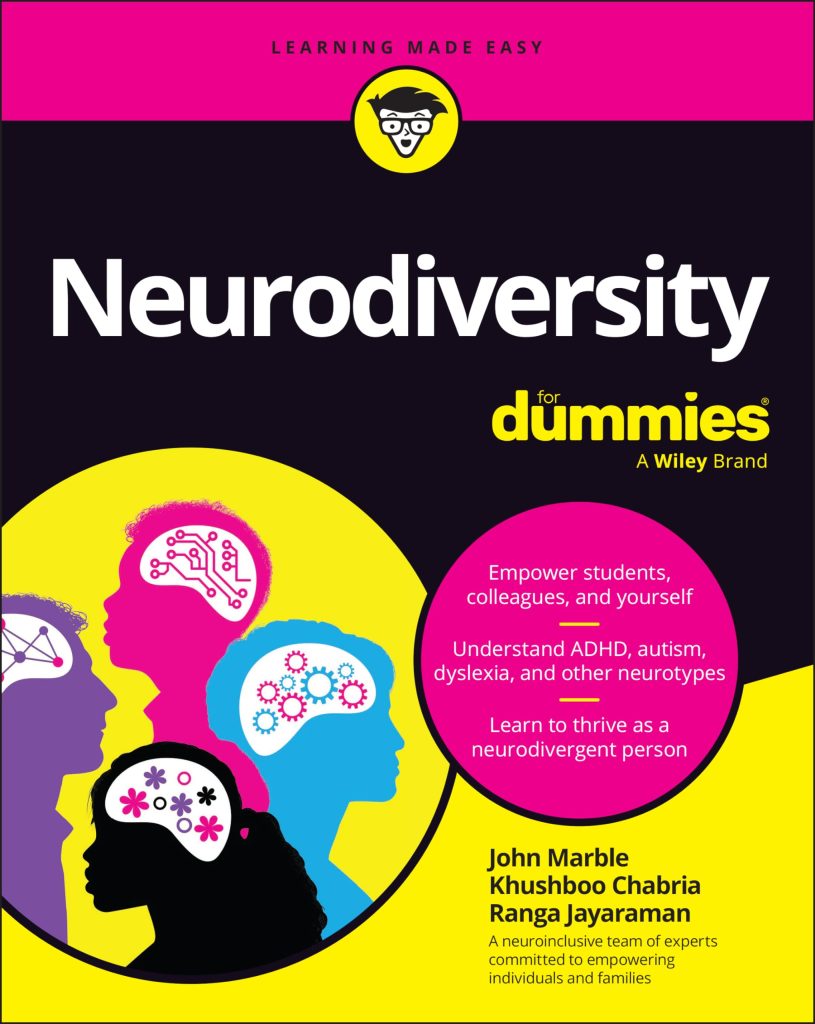
Neurodiversity For Dummies is a broad 384-page introduction written by neurodivergent authors and family members. It is useful for shared vocabulary and inclusion, but deliberately sacrifices diagnostic depth.
Worth it if
a household, manager or newly exploring reader needs one accessible map across several forms of neurodivergence
Watch out for
its breadth means no single condition, support level or individual experience receives comprehensive treatment
See Neurodiversity For Dummies on Amazon
Wiley published Neurodiversity For Dummies in 2024 by John Marble, Khushboo Chabria and Ranga Jayaraman. The official contents cover definitions, disability, autism, ADHD, dyslexia, mental health, self-advocacy and neuroinclusive environments. That range is the reason to choose it and the reason not to expect specialist depth.
Is broad coverage what you need right now?
This is a useful shared-reference book for people beginning from different levels of knowledge. It can give a family or workplace common language without requiring several specialist books at once. Because it runs to 384 pages and covers many subjects, borrowing or sampling is sensible. Readers with a specific assessment, legal or clinical need should go directly to condition-specific and authoritative guidance.
Where the reference-book format helps
Wiley confirms the authors, March 2024 first edition, 384 pages and a detailed contents list spanning core concepts and practical inclusion. Open Library independently confirms the work and authorship, though pagination varies by edition. The scope aligns with broad education, not diagnostic authority. NICE remains the appropriate source for clinical pathways and recommendations.
Why breadth can feel thin or overwhelming
The familiar “For Dummies” structure breaks topics into approachable sections, but simplification can flatten disagreements within neurodiversity communities and differences in support need. A broad book can also make readers feel informed without giving them the detail needed for a decision about assessment, treatment, education or employment law. Check claims that matter against current primary guidance.
Use the index, not a cover-to-cover plan
Start with the contents, not page one. Pick the chapter attached to a real conversation or design decision. Write one change you will make—altering communication, reducing an environmental barrier or asking a better question—then use a specialist source for implementation. Do not turn the book into a vocabulary test for other people. If several readers share it, agree which terms are useful and allow people to describe themselves differently.
Narrower books and free explainers to try first
Choose Explaining AuDHD for autism and ADHD together. Choose The Adult Autism Assessment Handbook for assessment practice. Choose free NICE and NHS guidance when the question is clinical. A public-library copy is preferable when you need occasional reference rather than a permanent workbook.
Borrow when you are still mapping the question
Choose this for breadth, shared language and practical inclusion prompts. Skip it when you already know which single topic needs depth. Its future-proof value is as a map to further reading, not a final authority.
Questions before buying a broad reference
Is it written by neurodivergent people?
Wiley describes the author team as including neurodivergent people and family members.
Does it cover more than autism and ADHD?
Yes. The publisher lists dyslexia and wider neurodiversity, disability, mental health, self-advocacy and inclusion topics.
Can it help a workplace?
It includes neuroinclusive environment material, but organisation-specific legal and occupational guidance should be checked separately.