
Review
Research-ledAdult Autism Support Guide Review: Practical Scope, Weak Authority Signals
Most promising when read as permission to change the room, not just tolerate it better.
Worth it if
best for autistic adults and supporters looking for practical changes around daily environments
Watch out for
not ideal if you need a diagnosis book or a memoir-led read
See Adult Autism Support Guide on Amazon
The room is wrong before you are wrong. The light is too sharp, the plan changed twice, and someone wants a quick answer while your body is still catching up.
The useful detail is the environmental angle. Autistic support should not be reduced to coping harder inside places that keep making things worse.
The environmental angle is the reason to consider it
The Adult Autism Support Guide earns its place if the reader wants to change the environment rather than simply tolerate it harder.
That environmental lens is useful because light, noise, transitions, social demand, and unclear expectations often create the problem before anyone starts talking about coping skills.
The limit is that broad support books can stay broad. The reader still has to choose one room, routine, or situation to adjust first.
Where broad support ideas can still help
- adult autism support focus
- environmental adjustments
- practical framing
- may be broad
- best used with one setting at a time
A confident title needs more authority behind it
I would buy it if you want practical autism support ideas for adult life.
I would not buy it if the immediate need is diagnosis, legal rights, or crisis support.
Check whose experience and sources shape the advice
Not ideal if you need a diagnosis book or a memoir-led read.
Use current autistic-led and clinical guidance alongside it
If Adult Autism Support Guide addresses only one layer, use Understanding Neurodiversity for the underlying problem.
What the current evidence lets us say about Adult Autism Support Guide
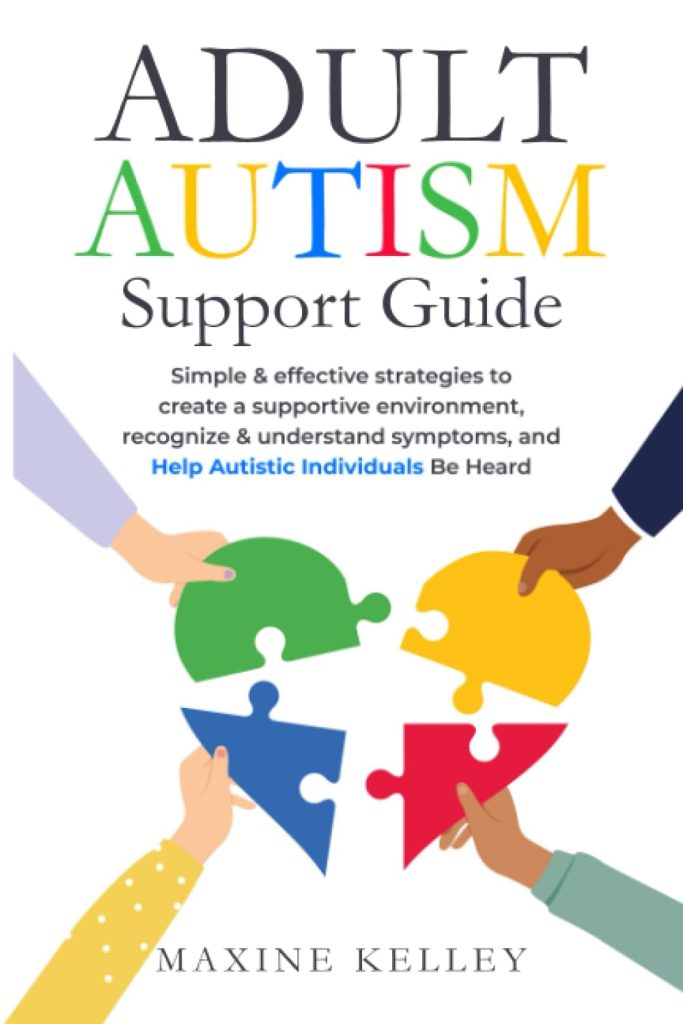
Maxine Kelley’s guide is positioned around supportive environments, recognition and helping autistic adults be heard. The framing is potentially useful because sensory and communication barriers are environmental as well as individual. Public publisher and author credentials are sparse, which materially lowers confidence in any clinical-sounding claim.
Where this Adult Autism Support Guide review has to stop
This is not a diagnostic guide, a rights manual or personalised support plan. Preview the references and tone before buying. NICE remains the stronger source for assessment and service recommendations, while autistic-led organisations can add lived-experience context.