Review
Research-ledUnderstanding Neurodiversity Review: Broad Illustrated Guide, Check the Claims
A useful shelf choice when the question is bigger than one label and you need language that does not flatten people.
Worth it if
best for readers who want a map of neurodivergence before deciding which path needs deeper reading
Watch out for
less useful if you already need a detailed guide on one specific diagnosis or support need
See Understanding Neurodiversity on Amazon
You search one label and suddenly every tab is arguing with every other tab. Autism, ADHD, dyslexia, dyspraxia, sensory processing, giftedness, trauma, masking. It becomes a hallway with too many doors.
The useful detail is scope. A broad book can make patterns feel less isolated, but broad can also mean you do not get enough depth on the part that is currently making life difficult.
Choose it for a visual map rather than specialist depth
This book earns its place as a broad map. It is useful when someone is trying to understand more than one label and does not want every search to become a separate rabbit hole.
That breadth matters for mixed households and late-realisation readers. ADHD, autism, dyslexia, dyspraxia, sensory needs, and learning differences often overlap in real families and workplaces.
The limit is depth. A broad book can orient you, but it will not replace a dedicated autism, ADHD, dyslexia, or assessment resource when the question becomes specific.
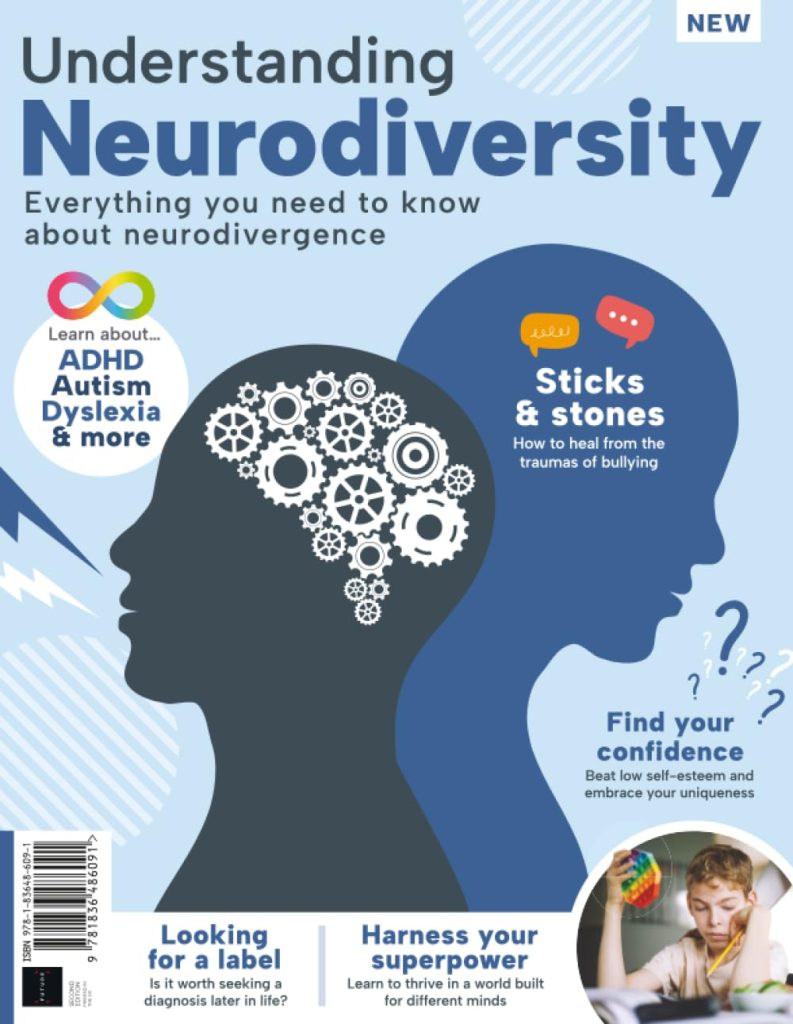
What the 132-page Future guide covers
- wide neurodiversity framing
- helpful orientation for mixed households
- less narrow than ADHD-only reading
- may not go deep enough for urgent needs
- good companion to site explainers
Broad language can blur important differences
I would buy it if the current problem is language and orientation. I would skip it if you already know the label and need tactics for one daily issue.
Use it as a shelf reference rather than homework. Reading every chapter at once is not required for it to be useful.
The magazine-style edition explains the format
Less useful if you already need a detailed guide on one specific diagnosis or support need.
Use condition-specific guidance for real decisions
If Understanding Neurodiversity addresses only one layer, use Understanding Neurodiversity for the underlying problem.
What the current evidence lets us say about Understanding Neurodiversity
Future Publishing’s 2025 paperback is a 132-page, large-format guide covering neurodiversity, autism, ADHD, dyslexia, dyspraxia, diagnosis, adjustments and overwhelm. Library records also describe it as a one-time magazine edition. That makes it a visual orientation resource rather than a conventional authored clinical handbook.
Where this Understanding Neurodiversity review has to stop
The public listing does not clearly name the contributing experts or show how every health claim was reviewed. Statements about prevalence, diagnosis and support should be checked against current condition-specific sources. Choose it for approachable breadth and illustrations, not authority or depth.