
Review
Research-ledDirty Laundry ADHD Book Review: Shame Relief, Not a Clinical Manual
Dirty Laundry is a short, accessible account of ADHD in a relationship, built around reducing shame and misunderstanding. It is useful for recognition and conversation, but not a comprehensive treatment guide.
Worth it if
you or a partner need humane language for familiar ADHD conflicts and a book short enough to finish
Watch out for
one couple’s experience cannot represent every ADHD presentation, relationship or support need
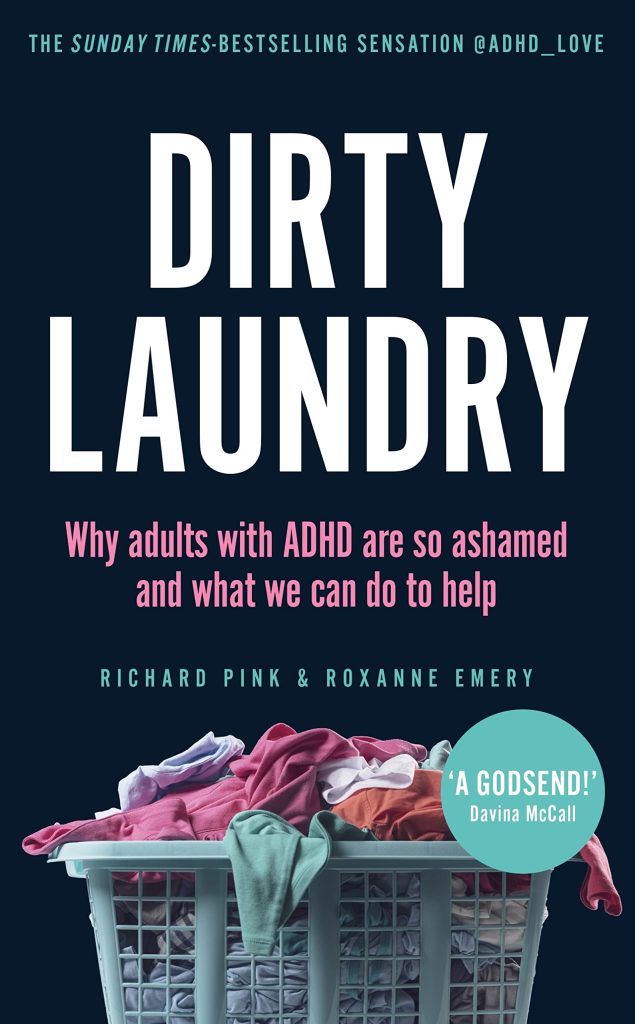
Richard Pink and Roxanne Emery built Dirty Laundry from their experience as a neurotypical and ADHD couple. Penguin describes a 144-page book in which common ADHD experiences are paired with personal examples, compassion and practical relationship responses. That format is intentionally approachable. It is not written as a diagnostic text or an evidence review of every intervention.
Will this book reduce shame or add another project?
This is a strong first or shared read when shame and repeated misinterpretation are the immediate problems. Its brevity and two-perspective structure can help a couple replace moral labels with more specific conversations. Buy for recognition and communication language, not for exhaustive ADHD education. If conflict is unsafe, severe or entangled with mental-health risk, a book is not enough.
Why the domestic examples land
Penguin and Penguin Random House confirm the authors, 144-page edition, audiobook availability and chapter premise. Their descriptions make the scope clear: lived experience, stigma reduction and relationship strategies. NHS guidance describes ADHD as manageable through individualised support that can include lifestyle changes, workplace changes, medicines and talking therapies. That broader context prevents the book from being mistaken for a complete care plan.
Where memoir-style advice reaches its limit
Personal stories are memorable partly because they are specific. A reader may not share Rox’s symptoms, Rich’s responses, their resources or their relationship dynamic. The compassionate framing can be helpful without making every suggested response appropriate. The book also cannot diagnose ADHD or resolve coercion, abuse, addiction, debt or acute mental-health needs.
Read the chapter that matches today’s mess
Read one chapter together and identify one recurring misunderstanding, not a list of everything either person does wrong. Translate the insight into one observable request, such as a neutral time check or a written handover. Review whether the change reduced friction after a week. Stop if shared reading turns into evidence for prosecuting each other.
When a clinical or workbook format fits better
Choose Explaining AuDHD when autism and ADHD interact. Choose an NHS or NICE resource for diagnosis and treatment pathways. Choose a clinician-led workbook when structured practice matters more than memoir and humour. Borrow the audiobook if joint listening is easier than two people completing a paperback.
Borrow first if the tone is the deciding factor
Choose Dirty Laundry for an accessible, shame-reducing conversation starter. Skip it when you need clinical depth, crisis support or a relationship framework beyond one couple’s lens. It earns recommendation by doing a small job clearly, not by covering all of ADHD.
Dirty Laundry questions before buying
Is Dirty Laundry only for couples?
No. Adults with ADHD and family members may also recognise the situations, but the relationship viewpoint is central.
Is it a diagnostic guide?
No. It describes lived experience and practical responses. Assessment and diagnosis require appropriate clinical routes.
Is there an audiobook?
Yes. Penguin Random House lists an audiobook read by the authors, which may be more accessible for some readers.
Publisher details and ADHD context
- Penguin UK Dirty Laundry edition page
- Penguin Random House description and formats
- NHS adult ADHD overview and support
Check the current Dirty Laundry listing
Penguin Random House lists an audiobook edition read by the authors, which may suit readers for whom listening works better than the page.


